Introduction to Common Spindle Tool Interfaces | Enhance Machining Accuracy and Stability
In high-precision CNC machining and grinding applications, the spindle tool interface plays a vital role in determining clamping rigidity, positioning accuracy, and cutting performance. Selecting the right interface directly influences machining efficiency, tool life, and production stability. This article introduces commonly used spindle interfaces—including HSK, BT, collet systems, and specialized grinding/dressing interfaces—to help users choose the most suitable configuration for their specific applications.
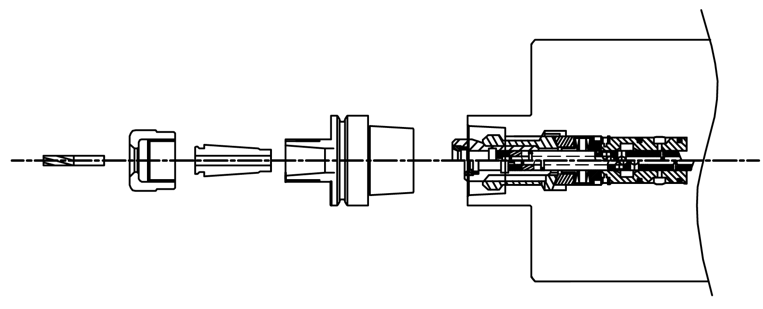
HSK Spindle Interface (Hohlschaftkegel)
HSK is a hollow shank tool interface designed for high-speed and high-precision operations. It features dual-contact geometry (taper and flange) which ensures excellent stiffness and repeatable clamping even at ultra-high speeds. The short taper design reduces centrifugal deformation, maintaining tool alignment during rapid spindle rotation.
Applications:
• High-speed milling (e.g., mold and die industry)
• Precision part production in aerospace and automotive sectors
• Ultra-precision surface and profile machining
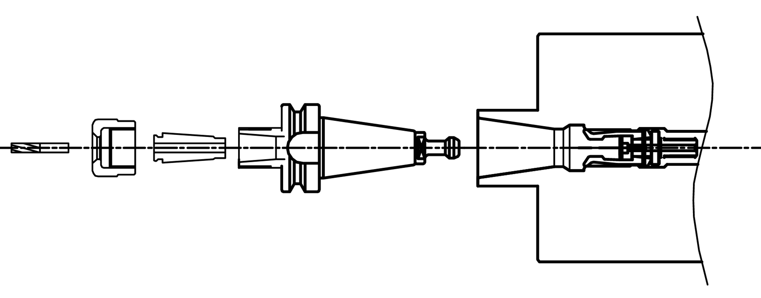
BT Spindle Interface (Base Taper)
BT interfaces are among the most widely used in CNC machining centers. Known for their symmetrical structure and stability, BT holders provide reliable performance across various cutting conditions. The standard single-taper design is compatible with most machines, while dual-contact variants (like BBT) enhance rigidity and positioning accuracy.
Applications:
• General-purpose CNC milling
• Mold base and core machining
• Medium- to heavy-duty metal cutting operations
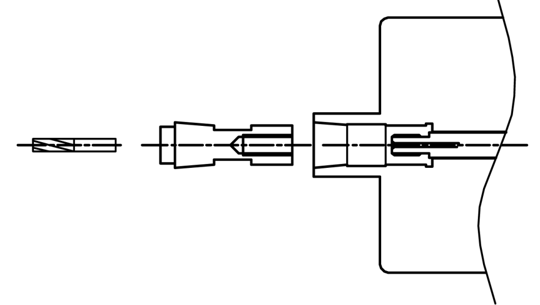
Collet Tool Holding Systems
Collet chucks offer a flexible, cost-effective clamping solution. They can accommodate a wide range of tool diameters, making them ideal for drilling, light milling, and non-metal material processing. Although collets offer less rigidity than taper-based systems, they are highly efficient in automated environments.
Applications:
• Robotic arms and compact machining cells
• CNC turning-milling centers
• Plastics and aluminum component machining
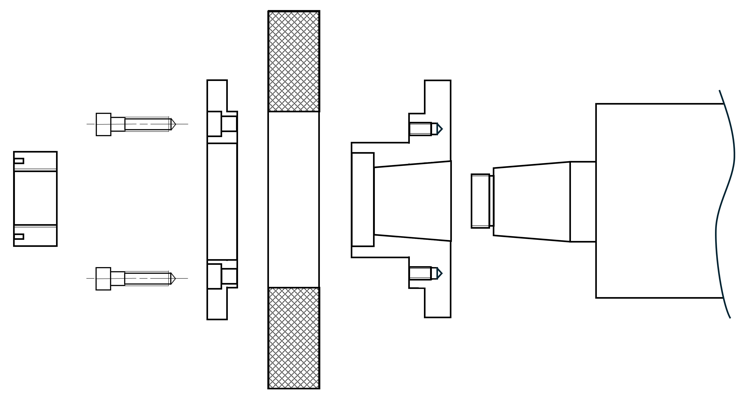
External Grinding Spindle Interface
External grinding spindles usually adopt a tapered connection for mounting grinding wheel flanges. This design prioritizes balance and clamping strength, enabling high-speed rotation with minimal vibration. It is critical for maintaining roundness and surface finish during cylindrical OD grinding.
Applications:
• Cylindrical OD grinders
• High-accuracy shaft component machining
Internal Grinding Spindle Interface
Internal grinding spindles are often designed with female threaded bores to securely clamp grinding quills. The quill’s slim profile and rigid connection allow access to small bores and internal diameters with high stability.
Applications:
• Bearing bore finishing
• Die and mold internal cavity grinding
• Needle bearing and micro-hole machining
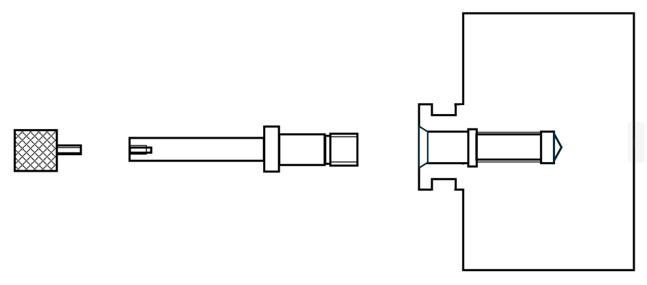
Dressing Spindle Interface
Dressing spindles are dedicated to reshaping and conditioning grinding wheels. They typically use a cylindrical shank interface secured with screws. These interfaces are optimized for frequent tool changes and consistent alignment.
Applications:
• CNC profile grinding machines
• Automated wheel dressing systems
• High-precision form correction
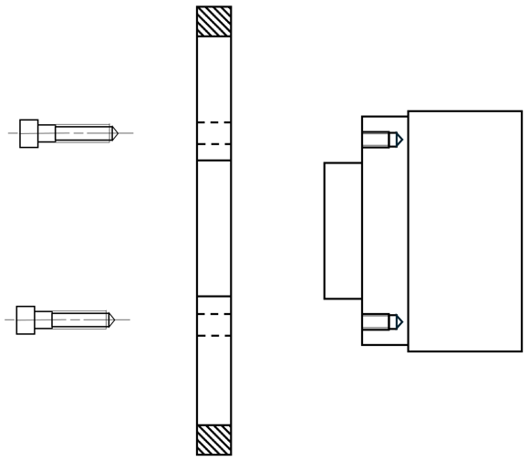
Choosing the Right Spindle Interface for Maximum Performance
Selecting a suitable spindle interface ensures cutting efficiency, dimensional accuracy, and reduced tool wear. Whether you're working with high-speed milling, heavy-duty metal cutting, or precision grinding, the right tool connection is essential for consistent machining quality and extended machine life.