Spindle Clamping Guidelines – Precision Mounting for CNC Applications
Spindle Holder Requirements – No Flange
When mounting a non-flange high-speed spindle, follow these requirements to ensure secure clamping, optimal accuracy, and extended spindle service life:
1. The clamping length should follow Fig. 1 and extend as far as possible to ensure even force distribution.
2. The minimum clamping length must exceed 1.5 times the spindle outer diameter (1.5×D) to prevent slippage or stress concentration.
3. The fixture bore tolerance should comply with ISO H6 to fit spindle outer diameter ISO h6, ensuring a precise and stable connection.
4. Spindle holder geometric accuracy requirements:
• Cylindricity error ≤ 0.01mm
• Hole concentricity error ≤ 0.01mm
5. A dual half-shell fixture design (Fig. 2) is recommended for balanced clamping and reduced risk of deformation.
6. A clearance of 0.01–0.02mm in the middle fitting zone is suggested for better assembly tolerance.
7. Avoid the incorrect fixture design shown in Fig. 3, which may damage the spindle sleeve or bearing seat.
8. The clamping zone must avoid the bearing area to prevent disturbing the preloading condition.
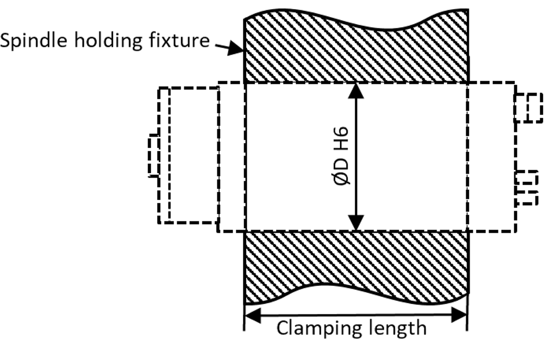
Fig. 1. Spindle holding fixture without flange
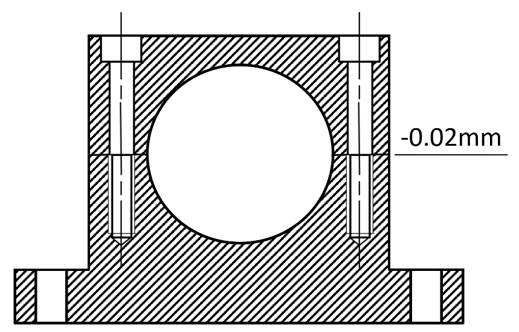
Fig. 2. Recommended fixture design
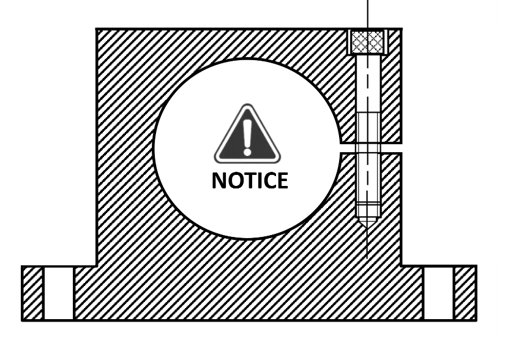
Fig. 3. Not recommended fixture design
Spindle Holder Requirements – With Flange
For flange-type spindle installation, proper fixture design is critical for machining accuracy and structural rigidity:
1. Extend the clamping length as much as possible to enhance overall fixture strength.
2. Fixture inner diameter tolerance should be between +0.015mm and +0.005mm for optimal flange fit.
3. Holder geometric accuracy must meet the following:
• Cylindricity error ≤ 0.01mm
• Concentricity error ≤ 0.01mm
4. The dimension X between the flange contact face and mounting fixture must follow Fig. 4.
5. Installation steps:
• Insert the spindle into the locating hole and securely bolt the flange to the holder to ensure proper positioning.
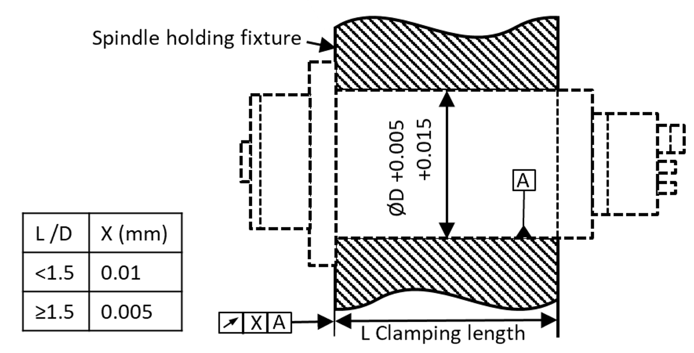
Fig. 4. Spindle holding fixture with flange
Precision Clamping for High-Performance Spindles
Whether with or without a flange, proper clamping design ensures spindle accuracy, prevents deformation, and extends equipment life. A precision clamping strategy significantly improves machining stability and spindle durability.